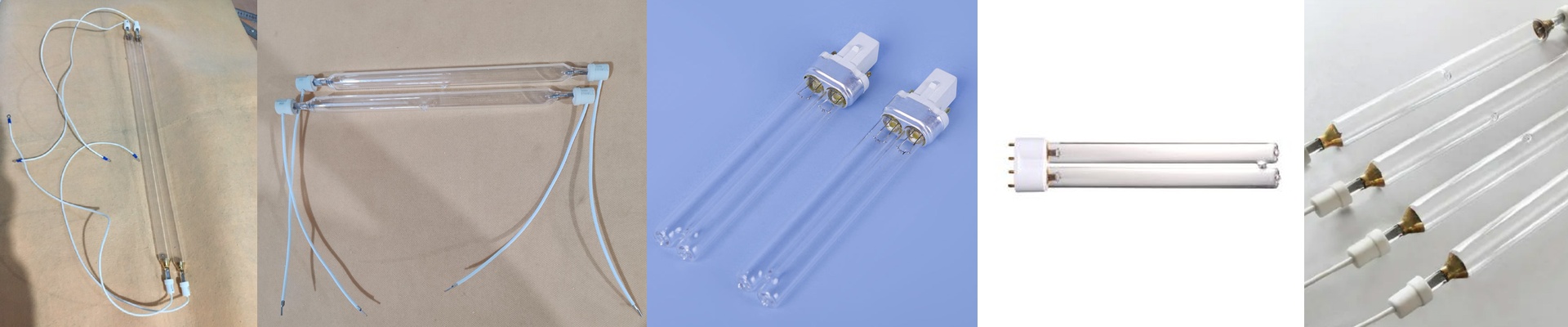
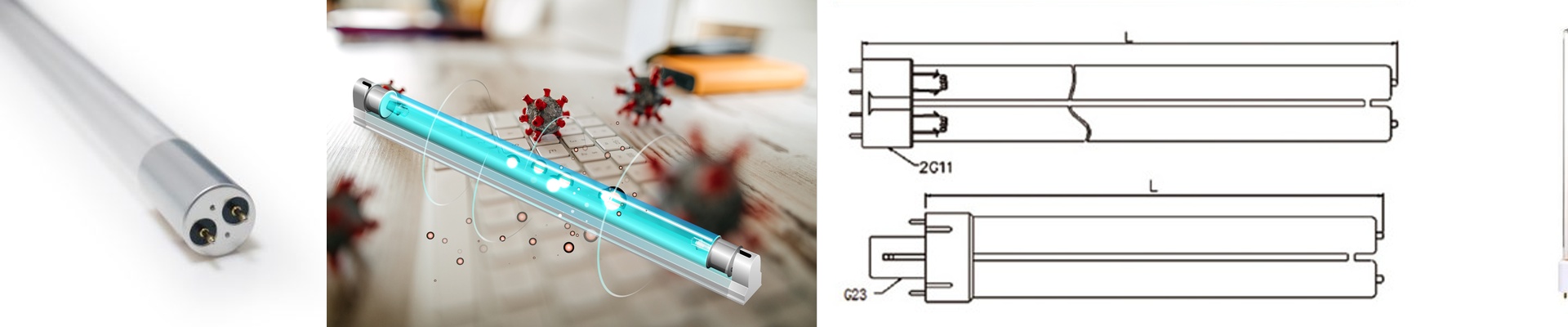
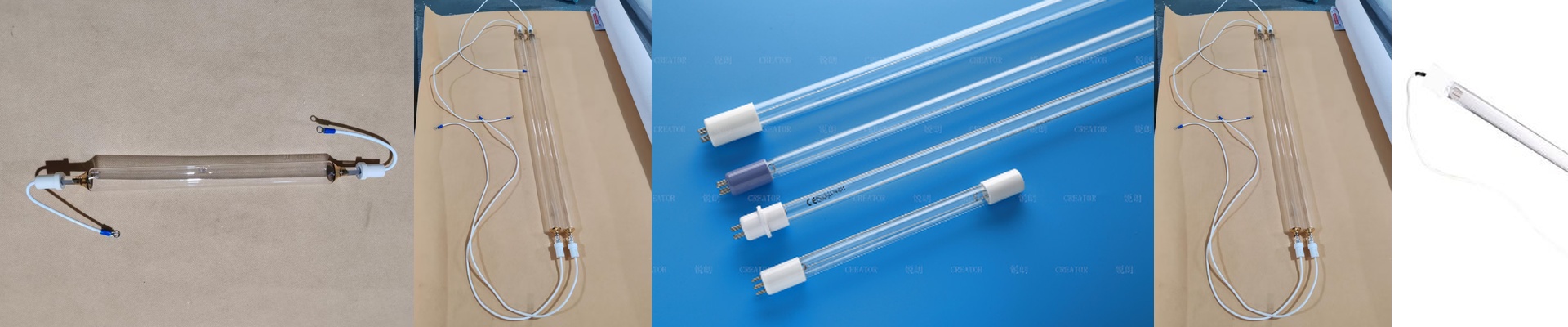
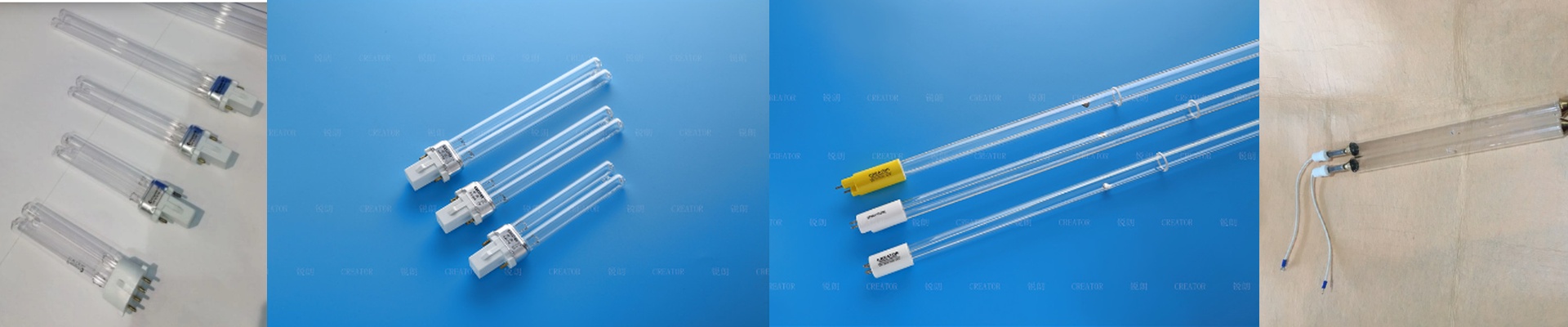
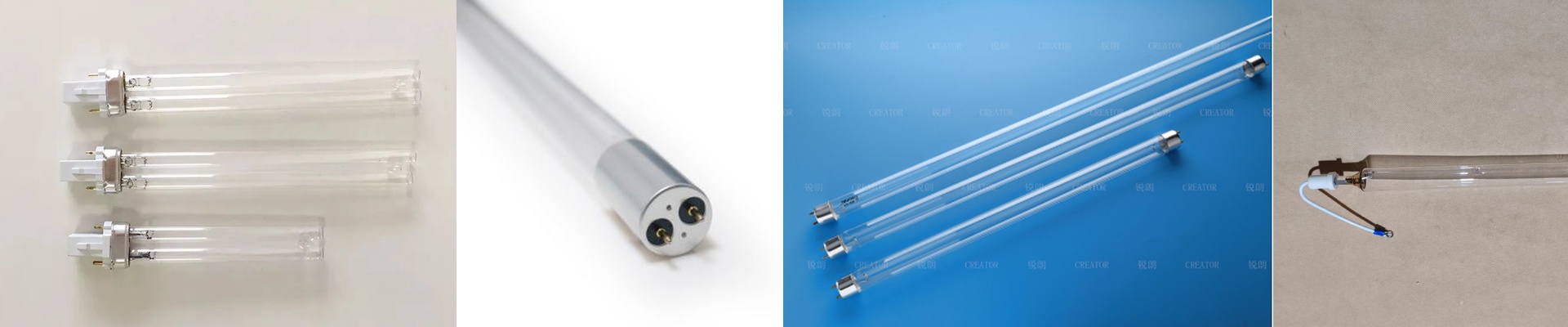
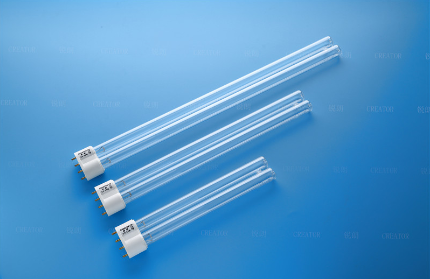
On the floor, the line doesn’t wait. You’re running wood veneer and solid-panel finishes—lacquers, varnishes, pigmented topcoats—and the curing has to happen fast, even, and without chasing the lamp. If the output drifts or the arc won’t hold, you get tacky surfaces, intercoat adhesion headaches, and scrap that shows up as downtime and rework. We build mercury UV lamps for wood finishing that treat curing as a controlled process variable, not a roll of the dice. They deliver repeatable spectral output, stable irradiance across the full width, and interface options that plug in the way your press is wired.
What matters, technically
With mercury UV lamps for wood finishes, what counts is what lands on the substrate—not what the ballast draws.
- **Spectral output for wood coatings:**The dominant emission sits at 365 nm, where many photoinitiators in lacquers and varnishes absorb efficiently. A stable 365 nm profile keeps cross-linking consistent through the topcoat, not just on the surface.
- **Irradiance and energy density:**Wood finishing lines need enough peak irradiance (measured in mW/cm² at the working plane) and delivered energy density (mJ/cm²) to fully cure thicker films without yellowing or cracking. We tune arc length, reflector geometry, and power density so the lamp hits the required dose at line speed.
- **Output stability and low decay:**Output drift quietly kills yield. Our lamps are engineered for stable arc characteristics and controlled electrode behavior, keeping intensity consistent over the life of the lamp. In practice, that means fewer line-speed tweaks and less variation in gloss and hardness panel to panel.
- **Reflector efficiency and uniformity:**The reflector isn’t decoration—it shapes the beam, controls hot spots, and determines how evenly energy is spread. A well-designed reflector system keeps dose uniform across the board, which matters on wide-format panels and prevents edge under-cure.
- **Life and operating cost:**Mercury vapor lamps are inherently long-life compared with many alternatives, but only if the lamp and ballast are properly matched. We design for stable electrode temperature and controlled fill pressure, which supports consistent output over thousands of hours.
Why it holds up in the real world
Wood finishing is a tough application. You coat different substrates—oak, maple, MDF, plywood, laminated panels—often with variable thickness and moisture content. The finish itself may be clear, pigmented, or filled, and film build changes with line setup. Our mercury UV lamps are built around the practical reality of that variability.
- **Interface compatibility that matches your press:**Whether your line uses a spiral connector head or a plug-in interface, we provide lamps that integrate directly. No rewiring projects. No custom brackets. You swap lamps on schedule and get back to production.
- **Fast replacement without re-engineering:**The lamp is a consumable, but it shouldn’t force a recalibration of the entire curing station. Our design keeps mounting and alignment repeatable, so after replacement the beam geometry and dose stay consistent.
- **Consistent cure across the panel:**Wood finishing lines often run at high speed, and the lamp has to deliver the required dose within a short dwell window. Stable irradiance and uniform distribution reduce edge effects and prevent the “center dry, edges tacky” pattern that shows up when reflector efficiency is marginal.
- **Process repeatability that cuts scrap:**When spectral output is consistent and the lamp-to-substrate distance is repeatable, you can set a curing window once and run it shift after shift. That means fewer rejects, fewer slow-downs, and fewer calls from quality to maintenance.
What you need to know up front
No lamp is universal. There are constraints you should plan for.
- **Compatibility is connector- and geometry-dependent:**Matching “any interface” requires knowing the exact connector type, pinout, and mechanical envelope of your curing station. Confirm lamp length, mounting, and wiring against your existing fixture before ordering.
- **Ozone management is part of the installation:**High-output mercury lamps can generate ozone, and wood finishing lines often run in semi-enclosed cabinets. Use an ozone-free or low-ozone quartz sleeve option where needed, and make sure the curing chamber has adequate ventilation to prevent ozone buildup.
- **Lamp-to-substrate distance matters:**Irradiance drops with distance, and uniformity changes with beam shape. Treat the working distance as a process setting—measure it, lock it, and verify it after lamp replacement.
- **Power density must match the coating system:**Too little energy and the finish stays under-cured; too much can cause surface skinning before the bottom layer cures, leading to stress cracks. The lamp has to be matched to the photoinitiator chemistry and film thickness. If your goal is stable curing on wood finishes—consistent gloss, hardness, and adhesion—start with a mercury UV lamp built for industrial finishing realities: strong 365 nm output, stable irradiance, and interface compatibility that lets you replace lamps quickly and keep the line running.